Netflix’s Korean lineup just delivered another global hit. “Teach You a Lesson“ (참교육), released on June 5, 2026, shot to the top of Netflix’s non-English TV charts within days — and it’s not hard to see why.
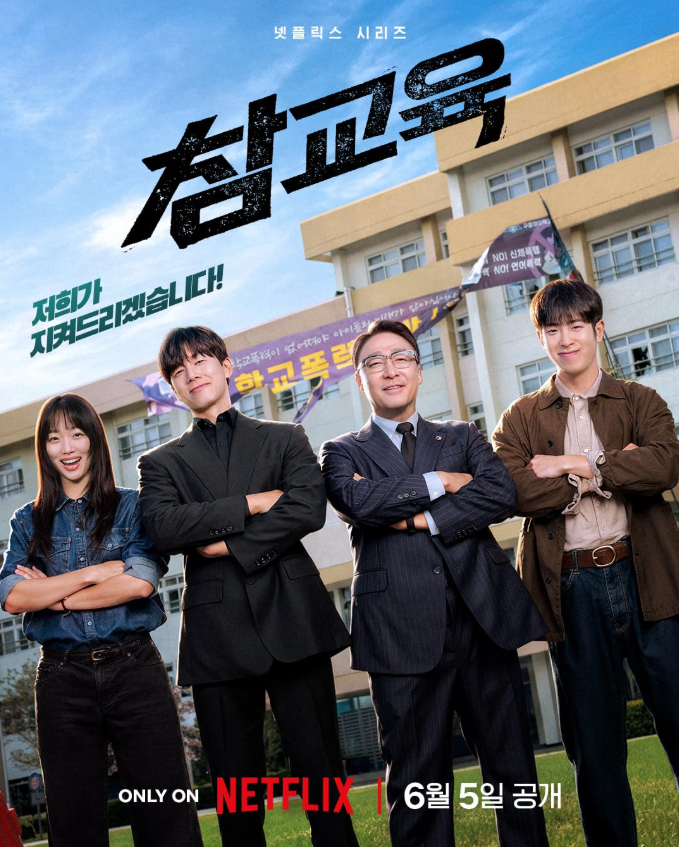
What Is “Teach You a Lesson” About?
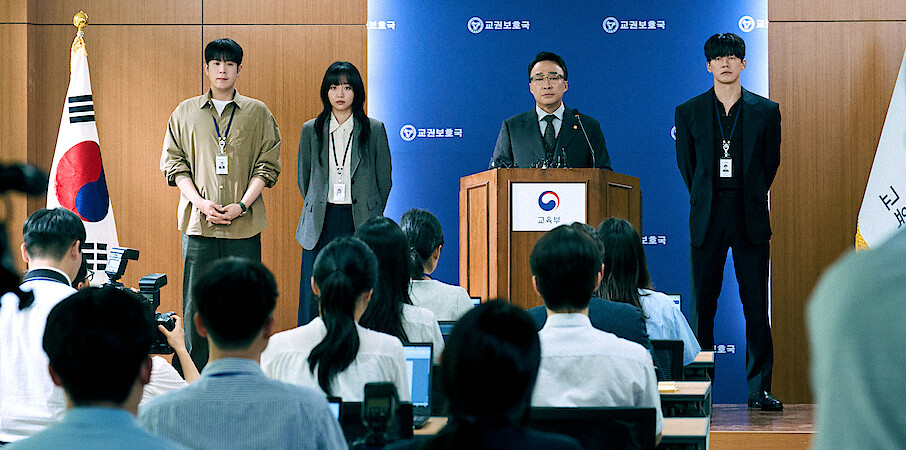
The premise is simple but satisfying: in a near-future Korea where teachers have lost almost all authority in classrooms, the government creates a special task force called the Office for Teacher Rights Protection (교권보호국). Its agents are sent into schools overrun by bullying, abusive parents, and out-of-control students — and they fight back, hard.
Each of the show’s 10 episodes functions almost like its own self-contained story, with the task force tackling a different school and a different crisis. It’s part workplace drama, part vigilante justice fantasy, wrapped around a very real social issue: the erosion of teachers’ authority in Korean schools.
Who’s In It?
The series brings together a heavyweight cast:
Kim Mu-yeol as Na Hwa-jin, the lead agent of the Office for Teacher Rights Protection
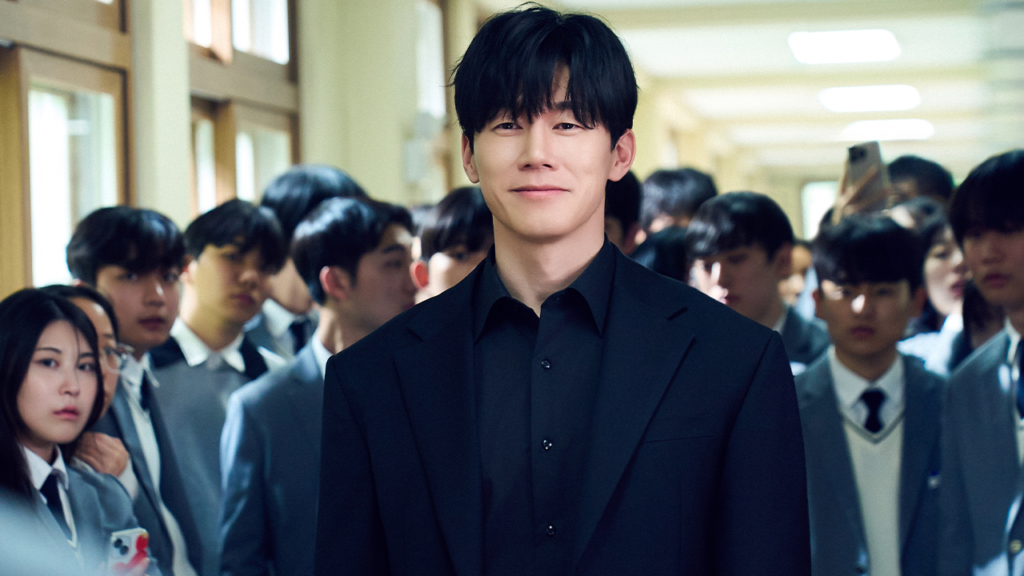
Lee Sung-min as the Minister of Education who created the agency

Jin Ki-joo as a sharp, no-nonsense agent with a military background

Behind the camera, it’s a reunion of sorts — director Hong Jong-chan and writer Lee Nam-gyu, the team behind acclaimed Netflix titles like Juvenile Justice and Daily Dose of Sunshine, bring the same blend of social commentary and emotional weight to this series.
Why Is Everyone Talking About “Teach You a Lesson”?
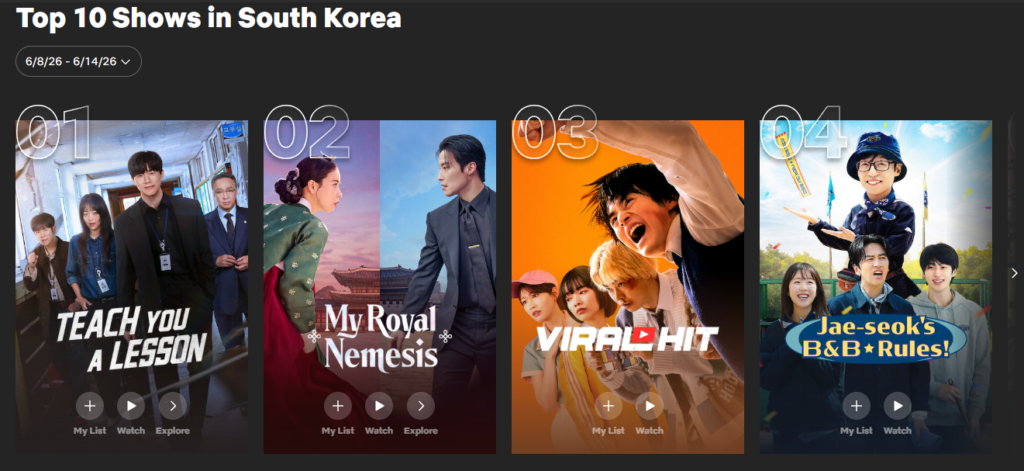
The numbers speak for themselves. Within its first week, “Teach You a Lesson” became the most-watched non-English series globally on Netflix, and by day seven, it had reached the No. 1 spot in 45 countries on FlixPatrol.
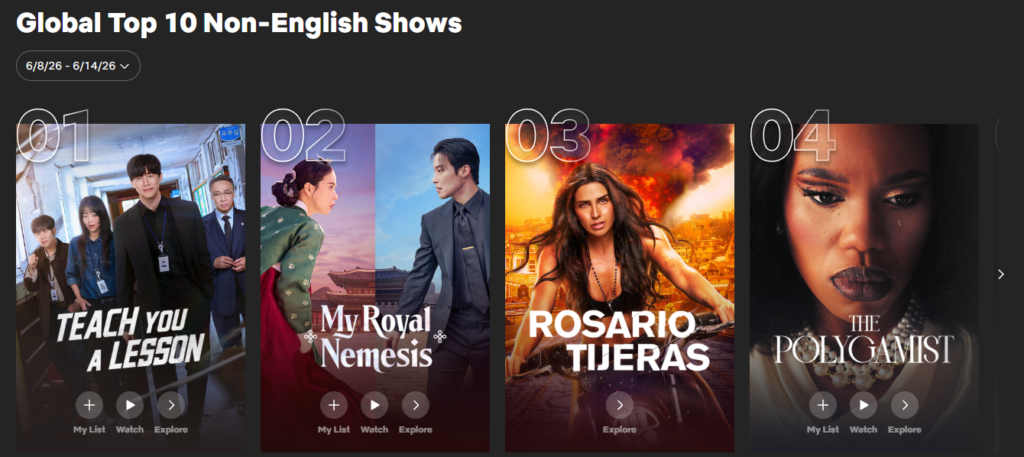
Part of the appeal is universal: school violence, teacher burnout, and powerless educators aren’t problems unique to Korea. The drama’s premise — what if someone actually stepped in to fix it? — clearly struck a nerve with audiences far beyond Korean borders.
The Controversy Behind the Catharsis
Not everyone is cheering. Even before the show aired, Korea’s largest teachers’ union held a press conference outside Netflix’s Korean office, arguing that the series risks glorifying corporal punishment and human rights violations as if they were acceptable solutions to school problems.

International media picked up on the same tension. Coverage from outlets like the South China Morning Post described the show’s methods as “state-sanctioned violence,” noting that the fictional agency’s tactics — including physical punishment — would be illegal and widely condemned in real life. The criticism isn’t subtle: the show is entertaining specifically because it lets viewers watch problems get solved in ways that wouldn’t (and shouldn’t) happen in reality.
It’s a familiar tension in revenge and vigilante-style dramas — the catharsis comes precisely from crossing lines the real world doesn’t allow. Whether that makes for irresponsible storytelling or just compelling fiction is something audiences (and critics) are still debating.
When Fiction Sparks Real Policy Debate
The show’s impact didn’t stay on screen for long. In Gyeonggi Province, the incoming superintendent of education publicly floated the idea of creating a real-world version of the Office for Teacher Rights Protection — though under a different name, something closer to an “Educational Activity Protection Bureau.”
He was careful to draw a clear line: no corporal punishment, no violence. The goal, he explained, is to protect both teachers’ authority and students’ right to learn, not to recreate the drama’s more extreme methods.

What made headlines, though, was who might staff such an agency. According to multiple Korean news outlets, the superintendent noted that a surprising number of certified teachers in Korea have backgrounds in special forces units — Marines, paratroopers, and special warfare units among them. Following his public proposal, he said he began receiving direct messages from teachers volunteering for the role, several phrasing it almost exactly like the show’s premise: “I want to be Gyeonggi’s own Na Hwa-jin.”
It’s a strange full-circle moment — a fictional vigilante created to dramatize a real crisis in Korean classrooms is now shaping an actual policy conversation about how (and by whom) that crisis might be addressed.

Whether this leads to an actual agency remains to be seen. A public forum on the proposal was expected to follow, and reactions have been mixed — some see it as a meaningful step toward protecting teachers, others worry that recruiting former special forces members could send the wrong message to students, regardless of the “no violence” framing.
Could There Be a Teach You a Lesson “Season 2”?
The source webtoon is still being serialized and has already moved into a second season. Combined with the show’s massive opening numbers, there’s a reasonable chance Netflix greenlights a second season — though nothing has been officially confirmed yet.

Should You Watch It?
If you’re drawn to Korean dramas that mix social commentary with high-stakes, satisfying payoffs — think Juvenile Justice meets vigilante drama — “Teach You a Lesson” delivers exactly that. Just go in aware that the show takes a deliberately exaggerated approach to a very real problem, and that’s part of what’s sparking debate.